
Tile Roof Waterproofing Services in Pretoria stop leaks by repairing cracked or displaced tiles, ridge capping, valleys and flashings before applying compatible reinforced membranes to vulnerable junctions. Logiline Waterproofing inspects the water path, underlay and roof-space entry point before specifying repairs.
Key Takeaways
| Waterproofing Parameter | Technical Specification / Direct Answer |
|---|---|
| Primary system | Tile, ridge and flashing repair with reinforced membrane detailing |
| Compatible substrates | Concrete or clay tiles, mortar, masonry and metal flashings |
| Roof pitch | Follow the tile manufacturer; 1:80 applies only to horizontal details |
| Sheet membrane laps | 100 mm side laps and 150 mm end laps on specified torch-on work over compatible non-combustible substrates |
| Quality control | Controlled water testing; 24-hour flood tests only on suitable horizontal areas |
| Service life | Controlled by preparation, drainage, UV exposure and maintenance |
Root Causes of Tile Roof Waterproofing Services in Pretoria Ingress and System Failure
The service must trace water beyond a ceiling stain because runoff travels along battens, underlay and rafters. A Pretoria roof waterproofing assessment checks broken tiles, side laps, valleys, chimney abutments and pipe flashings before coating work starts.
Highveld temperature swings make tiles, flashings and mortar move at different rates. Thermal expansion opens micro-cracks in ridge bedding and acrylic films. Blocked valleys hold water, while wind-driven rain pushes beneath poorly aligned tiles. Ultraviolet exposure makes unprotected membranes brittle. Building waterproofing requires a continuous barrier at every junction, not paint across the entire roof.
Tile Roof Waterproofing Services in Pretoria correct failures caused by short overlaps, loose counter-flashings and incompatible sealants. Logiline Waterproofing uses its tile roof waterproofing service across Gauteng to repair the water-shedding layer first. Compare this approach with professional waterproofing services in Gauteng.
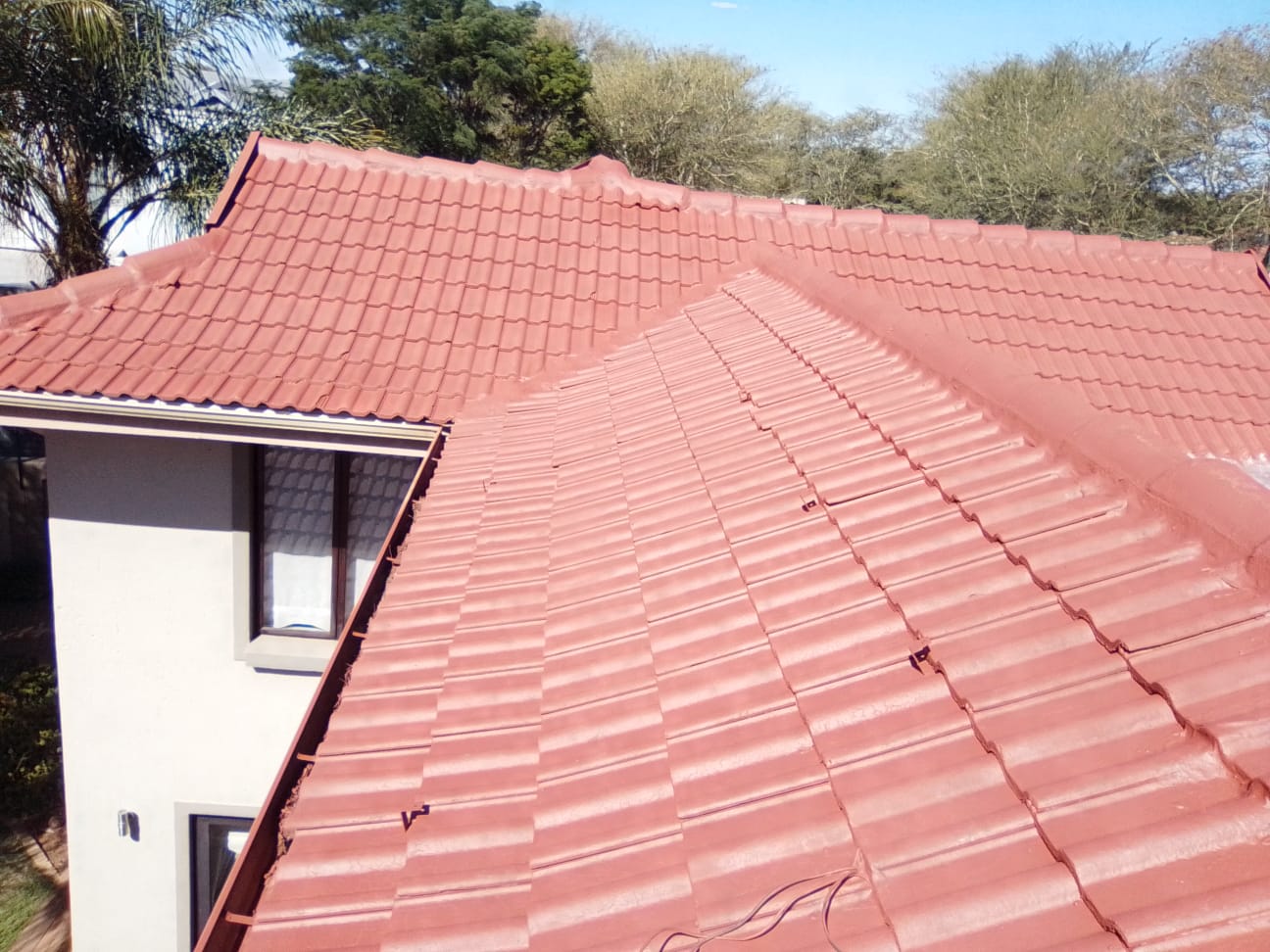
Technical System Comparison for Tile Roof Waterproofing Services in Pretoria
| System Type | Dry Film Thickness | Minimum Lap | UV Exposure Rating | Curing Time | Suitability |
|---|---|---|---|---|---|
| Torch-On Bitumen, 4 mm APP | 4 mm sheet per layer | 100 mm side, 150 mm end | Mineral finish or UV topcoat | Bonded on cooling | Protected, non-trafficable concrete details, not tile faces |
| Liquid Polyurethane / Pure Elastomeric | 1.0 to 1.5 mm typical DFT | Seamless; reinforce joints at least 50 mm | UV topcoat for aromatic PU | 24 to 72 hours | Non-trafficable or specified maintenance traffic |
| Acrylic Polymer with Bonded Polyester | 0.8 to 1.2 mm typical DFT | Polyester overlaps at least 50 mm | UV-resistant complete system | 4 to 6 hours touch-dry | Non-trafficable ridges, valleys and flashings |
| Cementitious Waterproofing Slurry | 2 to 3 mm | No sheet lap; reinforce joints at least 50 mm | Protect or cover | Moist-cure 3 to 5 days | Protected masonry and mineral details |
System choice follows the substrate and product data sheet. Bitumen membrane work in Pretoria suits concrete details, while torch-on waterproofing in Gauteng needs controlled heat and a non-combustible base. Cementitious waterproofing systems belong on mineral substrates, not glazed tiles.
Substrate Preparation and Application Sequence for Tile Roof Waterproofing Services in Pretoria
The work depends on disciplined preparation. Logiline Waterproofing follows this sequence:
- Prepare the substrate. Replace cracked tiles, secure displaced units and remove failed mortar. Grind only compatible concrete details. Wash without driving water beneath tiles, test moisture and repair screeds.
- Prime the surface. Apply the specified acrylic, bituminous or epoxy primer to dry, sound details. Match it to the membrane and substrate porosity.
- Lay the membrane. Embed polyester into wet acrylic at ridges, valleys and flashings. Heat-weld approved torch-on details with 100 mm side laps and 150 mm end laps.
- Complete flashings. Turn membranes onto parapets, seal pipe collars, preserve drip edges and place counter-flashings above terminations.
- Verify watertightness. The team uses controlled hose testing on pitches. Logiline Waterproofing applies the 24-hour ASTM D5957 flood protocol only to eligible horizontal details.
These controls also govern roof membrane waterproofing in Pretoria and broader waterproofing services across Pretoria.
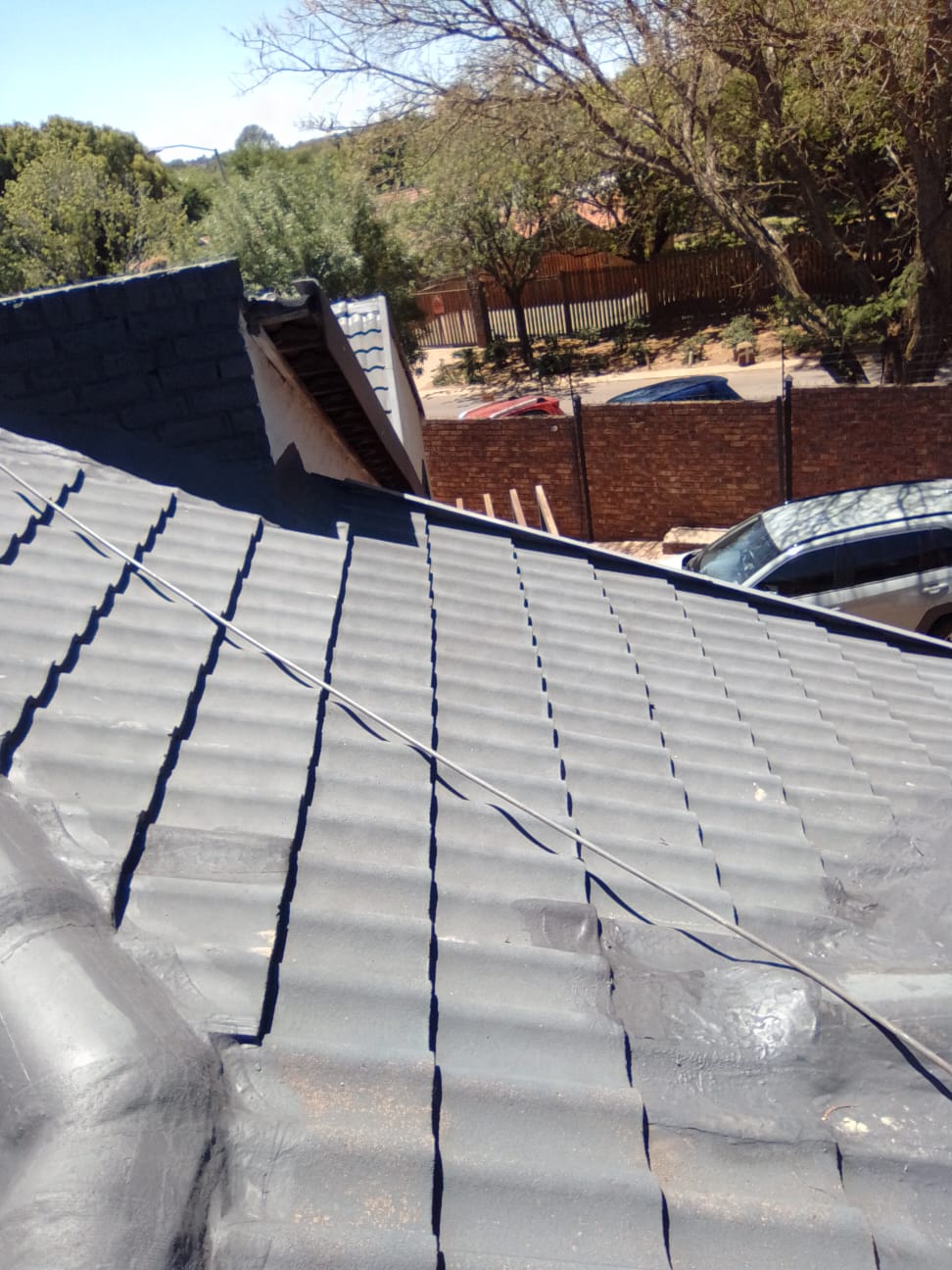
Maintenance, Inspection and Tile Roof Waterproofing Services in Pretoria Longevity
The system lasts longer when gutters and valleys are cleared twice yearly and after severe storms. Inspect cracked tiles, ridge joints, fasteners, penetrations and coating chalking.
Reapply UV-reflective topcoats at the stated interval. Repairs must remain compatible with the membrane. SANS 10400-L covers roof performance and drainage, while the tile manufacturer controls pitch and fixing.
Across Pretoria, Logiline Waterproofing records defects, moisture readings and materials. This record helps Tile Roof Waterproofing Services in Pretoria identify movement before water reaches ceilings.
Arrange a technical inspection for Tile Roof Waterproofing Services in Pretoria before a damaged valley, ridge or flashing spreads moisture through the roof space.
Frequently Asked Questions
What is the minimum pitch for a waterproofed tile roof?
Why does waterproofing over tiles bubble or peel?
Can waterproofing be applied over existing screed or paving?
How often should Tile Roof Waterproofing Services in Pretoria be inspected?
Technical note: thickness, curing, laps and primer selection must follow the current product data sheet.
