Workmanship Warranty
Free On-Site Assessment
Serving All of Gauteng
Roof waterproofing services Pretoria property owners can rely on start with inspection, moisture diagnosis and a system matched to the substrate. Logiline Waterproofing repairs tile, concrete and metal roofs with compatible primers, reinforced membranes and correct flashings.
Key Takeaways
| Waterproofing Parameter | Technical Specification / Direct Answer |
|---|---|
| Primary systems | 4 mm APP torch-on, polyurethane, reinforced acrylic, or cementitious slurry |
| Compatible substrates | Concrete screeds, roof tiles, IBR metal, masonry and prepared bituminous sheets |
| Minimum fall | At least 1:80 to an outlet or edge where flow is uninterrupted, subject to SANS 10400-L |
| Sheet membrane laps | 100 mm side laps and 150 mm end laps for the specified torch-on build-up |
| Quality control | Adhesion checks, detail inspection and a 24-hour flood test on structurally suitable horizontal areas |
| Expected service life | Governed by preparation, drainage, UV exposure, workmanship and maintenance |
Root Causes of Roof Waterproofing Services Pretoria Ingress & System Failure
Effective roof waterproofing services Pretoria teams trace water beyond the first damp mark. Water travels along rafters, screeds and membrane interfaces. A professional waterproofing contractor in Gauteng checks outlets, upstands and penetrations, then maps moisture with a capacitance meter or pin probe.
Pretoria roofs face strong ultraviolet exposure, summer storms and thermal cycling. Movement opens micro-cracks in screeds, ridge mortar and acrylic films. Ponding adds hydrostatic pressure where falls are shallow or outlets sit high. Unprotected bitumen oxidises, while incompatible coatings lose adhesion. Waterproofing covers the barrier and every junction, not a surface coat alone.
Poor torch control, trapped moisture, short laps or unsealed T-joints cause seam failure. Bubbles indicate vapour pressure, contamination or incomplete bonding. Flashings fail where membranes stop short of parapets, collars or counter-flashings. Logiline Waterproofing checks cracked tiles, ridges and valleys through its tile roof waterproofing service in Gauteng. Compare regional approaches for roof waterproofing in Johannesburg and roof waterproofing in Midrand.
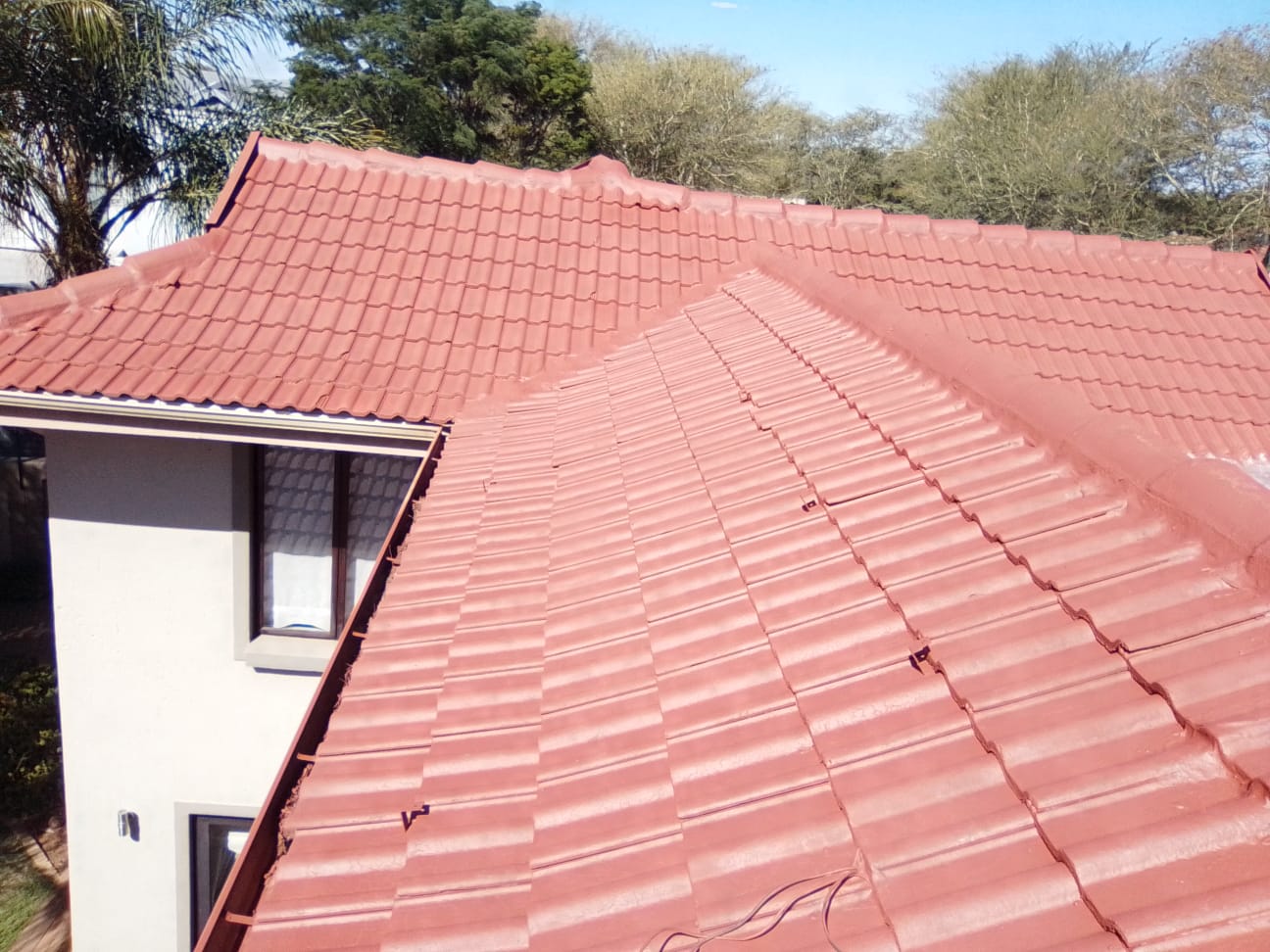
Technical System Comparison for Roof Waterproofing Services Pretoria
| System Type | Dry Film Thickness | Minimum Lap | UV Exposure | Curing Time | Suitability |
|---|---|---|---|---|---|
| Torch-On Bitumen, 4 mm dual-ply elastomeric/APP | 4 mm sheet per ply | 100 mm side, 150 mm end | Mineral finish or UV topcoat | Bond on cooling | Protect from traffic |
| Liquid Polyurethane / Pure Elastomeric | 1.0–1.5 mm typical | Seamless, fabric at least 50 mm | UV topcoat for aromatic PU | 24–72 hours | Non-trafficable or specified maintenance traffic |
| Acrylic Polymer with Bonded Polyester | 0.8–1.2 mm typical | Polyester at least 50 mm | UV-resistant complete system | 4–6 hours touch-dry | Non-trafficable |
| Cementitious Waterproofing Slurry | 2–3 mm | No lap, joints at least 50 mm | Protect or tile | Moist-cure 3–5 days | Protected or below tiles |
System selection follows substrate condition and product data. Logiline Waterproofing specifies torch-on waterproofing in Gauteng for compatible low-slope concrete, cementitious waterproofing in Gauteng for mineral substrates, and roof membrane waterproofing services in Pretoria where reinforced systems suit the details.
Substrate Preparation and Application Sequence for Roof Waterproofing Services Pretoria
Roof waterproofing services Pretoria projects succeed or fail at preparation. Logiline Waterproofing follows a controlled sequence:
- Prepare the substrate. Remove unsound coatings, laitance and dirt by grinding or scarifying. Pressure-wash, moisture-test, and repair cracks, hollow screed and defective falls.
- Prime the surface. Apply a compatible deep-penetrating bituminous, epoxy or acrylic primer to bind dust and regulate porosity. Test adhesion on dense or coated surfaces.
- Lay the membrane. Torch sheets with even heat and a consistent bitumen bleed. Maintain 100 mm side laps and 150 mm end laps. Apply liquid systems at the manufacturer’s wet-film coverage.
- Complete details. Turn membranes up parapets, seal pipe penetrations and form drip edges. Counter-flashings must shed water over reinforced terminations.
- Verify watertightness. Logiline Waterproofing uses a minimum 24-hour ASTM D5957 flood test on eligible horizontal areas after confirming structural capacity and drainage controls. Sloped tiled roofs receive a controlled water test.
Use this sequence to assess waterproofing services across Pretoria and bitumen membrane services in Pretoria.

Maintenance Protocols, Inspection, and Roof Waterproofing Services Pretoria Longevity
Maintenance extends roof waterproofing services Pretoria system life. Clear outlets, gutters and overflows twice yearly and after severe storms. Inspect joints, terminations, flashings and penetrations for damage.
Reapply UV-reflective topcoats at the product-data interval because exposure, colour and film build affect degradation. Early repairs protect the field membrane and limit moisture spread beneath overlays.
SANS 10400-L requires safe drainage, with a minimum 1:80 fall where flow is uninterrupted. Changes to screeds, outlets or equipment must preserve that route. Across Pretoria, Logiline Waterproofing records defects, moisture readings, repair limits and materials so maintenance remains compatible. The principles also guide waterproofing work in Sandton, but each roof needs assessment.
Arrange an assessment for roof waterproofing services Pretoria before the next heavy storm exposes a weak seam or flashing.
Frequently Asked Questions
What minimum slope should a waterproofed flat roof have?
Why does torch-on waterproofing bubble?
Can waterproofing go over existing paving or screeds?
How often should roof waterproofing services Pretoria systems be inspected?
Technical notes: membrane thicknesses, lap widths, coating coverage and curing times must follow the selected manufacturer’s current data sheet and the project specification.